
Construction Logistics Plan – London Borough of Waltham Forest
- November 11, 2025
- News
- Comments Off on Construction Logistics Plan – London Borough of Waltham Forest
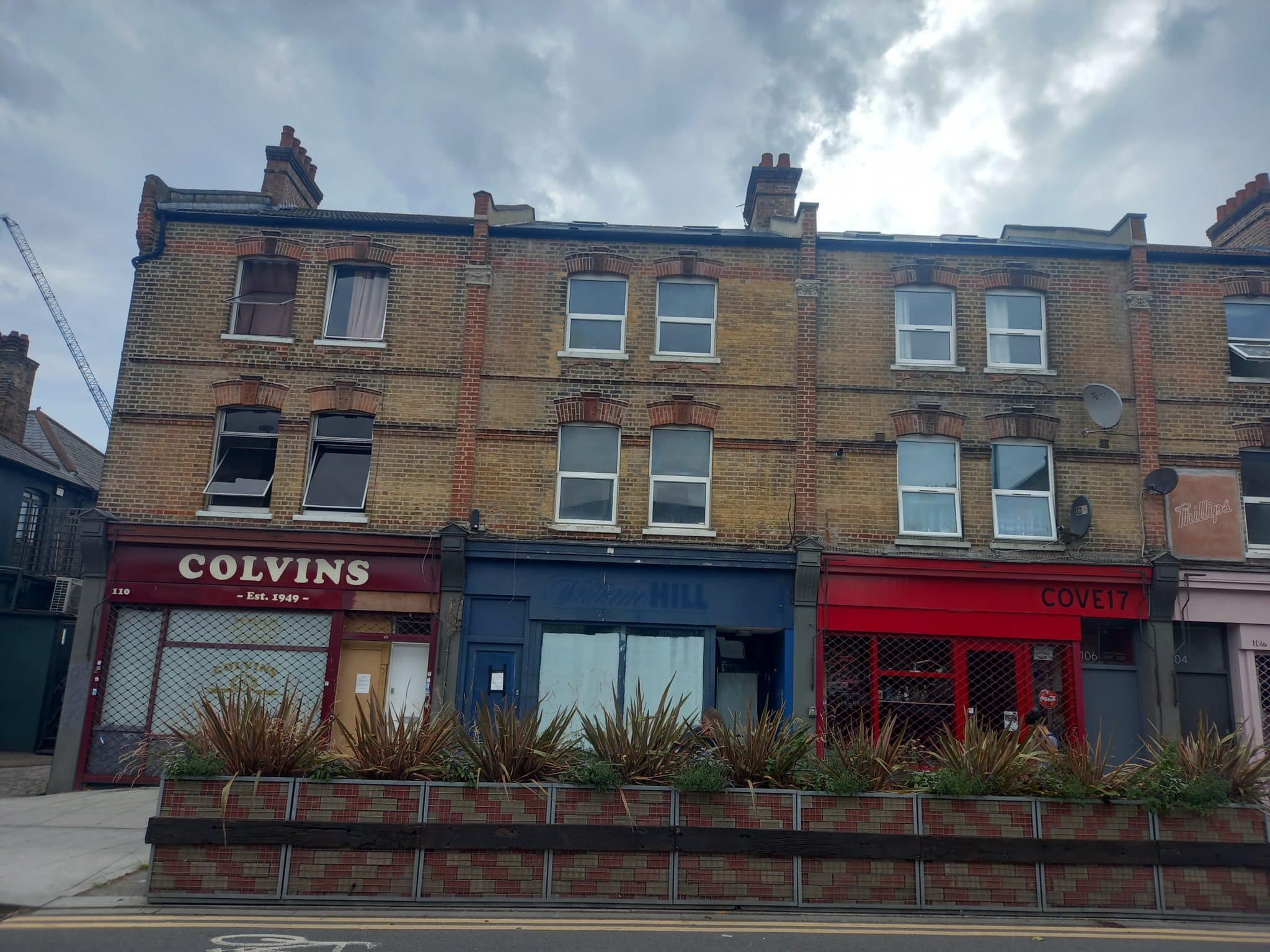
SANDS Civil Engineering Consultancy was commissioned to prepare an Outline Construction Logistics Plan for proposed works at 108 Wood Street, E17 3HX, a constrained high‑street location in Walthamstow with significant day‑to‑day pedestrian activity and adjacent transport infrastructure. The CLP was produced in line with CLOCS Construction Logistics Plan guidance, with the intention of serving as a live document to support safe delivery during the construction period.
The Challenge
108 Wood Street sits within an active town centre corridor with multiple competing demands on the highway. Wood Street (B160) includes nearby bus stops and cycle provision, and the site is in close proximity to high footfall generators including retail uses and the Wood Street Indoor Market. The CLP also recognised the presence of several nearby schools and the likelihood of school pupils using the footway during peak periods, requiring careful control of deliveries and any activities that interact with the footway.
A key constraint was the limited ability to load/unload directly at the frontage due to restrictions, bus infrastructure and cycle facilities, meaning the delivery strategy needed to focus on controlled unloading from suitable locations and safe transfer across the footway when required.
Our CLOCS Construction Logistics Plan Approach
Our approach focused on developing a CLOCS‑compliant CLP that prioritised pedestrian safety, reduced highway disruption, and provided a clear, deliverable framework for construction access and servicing.
Each CLP is issued as a coordinated package, supported by project‑specific drawings including traffic routing plans, a site logistics/site plan, and vehicle swept path analysis to evidence safe and deliverable construction access. For 108 Wood Street, the submission included:
- Traffic Routing Plans – showing access/egress strategy and key constraints such as local restrictions and route notes
- Local Context Plan – highlighting nearby sensitive receptors such as stations, schools and key destinations
- Vehicle Swept Path drawings (including junction analyses and parking bay manoeuvres under supervision
- Construction Site Plan identifying the parking bay suspension strategy and potential conflict areas during material transfer and site layout for construction activities.
The Construction Logistics Plan establishes a clear framework to inform the Planning and Highway Authority, while recognising that the appointed contractor is responsible for the day‑to‑day management, coordination, and delivery of the works.
Construction Traffic Assessment and Delivery Controls
The CLP included a structured assessment of construction vehicle activity across the programme and set out delivery controls to manage impacts in a busy high‑street environment. Measures included consolidated deliveries where possible, pre‑arranged delivery timing, and delivery retiming to avoid peak periods, alongside active management by banksman/traffic marshal where construction activities interface with the public highway.
The plan explicitly referenced the need to manage deliveries sensitively around the local environment, including avoiding movements across the footway during school peak periods where practicable.
Parking Bay Suspensions and Highway Interface
Given the restrictions along Wood Street, the CLP identified the likely need for parking bay suspensions to support servicing—particularly during early site clearance and for scheduled delivery/waste collection days. The Site Plan sets out an approach that includes suspension during demolition/excavation to accommodate skips/removal vehicles and intermittent suspensions for programmed deliveries, with potential additional suspensions for major consolidated deliveries where required.
Build Methodology (Proportionate)
The works are relatively straightforward in construction terms and include roof removal, loft conversion with dormer, a rear extension for a small toilet/shower, and internal fit‑out. As such, the CLP focuses primarily on logistics, safety, and highway interface rather than complex construction techniques, ensuring the approach remains proportionate while addressing the real risk drivers of a high‑footfall town‑centre site.
Value Delivered
This project demonstrates our ability to deliver a CLOCS‑compliant Construction Logistics Plan as a coordinated submission—combining the written logistics strategy with the technical drawings required to evidence safe and deliverable construction access. For 108 Wood Street, the CLP was supported by Traffic Routing Plans, a detailed Site Plan (including parking bay suspension strategy), and Vehicle Swept Path drawings demonstrating junction manoeuvres and supervised parking/loading arrangements.
Construction Logistics & Highways Expertise
This case study highlights our experience in producing CLOCS‑compliant Construction Logistics Plans for high‑street locations, where pedestrian safety, school movements, and constrained delivery requirements must be addressed with a clear, deliverable strategy supported by robust drawings.
If your project requires a Construction Logistics Plan or Construction Traffic Management Plan supported by swept path analysis, traffic routing plans and site logistics drawings, contact our team to discuss how we can support your development.
Refer to out portfolio and news pages for further CLP project examples. Here are our most resent sites in Waltham Forest:
- 108 Wood Street – Commercial and Residential Refurbishment
- 52 Kingswood Road – New Residential Build
- 1 Cavendish Road – Demolition and Rebuild
- 112 Warren Road – Extension and Rebuild

Recent Comments